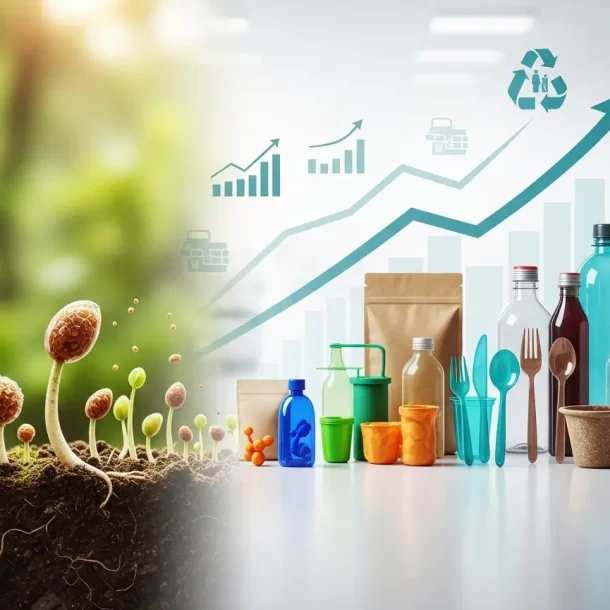


Plastic pollution is one of the most pressing environmental challenges of our time. While recycling has long been seen as the solution, we now know that most plastic still ends up in landfills, oceans, or incinerators. It’s increasingly clear that we need materials built for circularity from the start. Enter polyhydroxyalkanoates (PHAs)—home compostable, marine-degradable biopolymers. In this Q&A, I spoke with Fred Pinczuk, co-founder and Chief Technology Officer of ecogenesis biopolymers, LLC , about where PHAs and other bioplastics stand today, how they’re being used, and what it takes to bring better materials to market.
Fred: I’ve worked in the plastics industry for over 35 years—across packaging, automotive, medical, food, you name it. My background is in petrochemical plastics. But about six years ago, I was brought in to help commercialize a water bottle made from PHA. That was my first real encounter with the material, and it completely changed how I saw the future of plastics.
Not long after, I joined another project focused on developing PHA-based packaging. That one eventually shifted direction, but the experience stuck with me. About a year and a half ago, my business partner and I founded Ecogenesis Biopolymers to keep working on sustainable materials—especially for products that don’t have realistic end-of-life solutions today.
Fred: We mostly focus on PHAs and plant based thermoplastic polyurethanes (TPUs), but our strategy in how we use them is a little different. A lot of the plastics industry, especially packaging, still clings to recycling as the default end-of-life solution for their products—even when it doesn’t actually work. If they could “wish-cycle” their way out of the plastic pollution problem, they would.
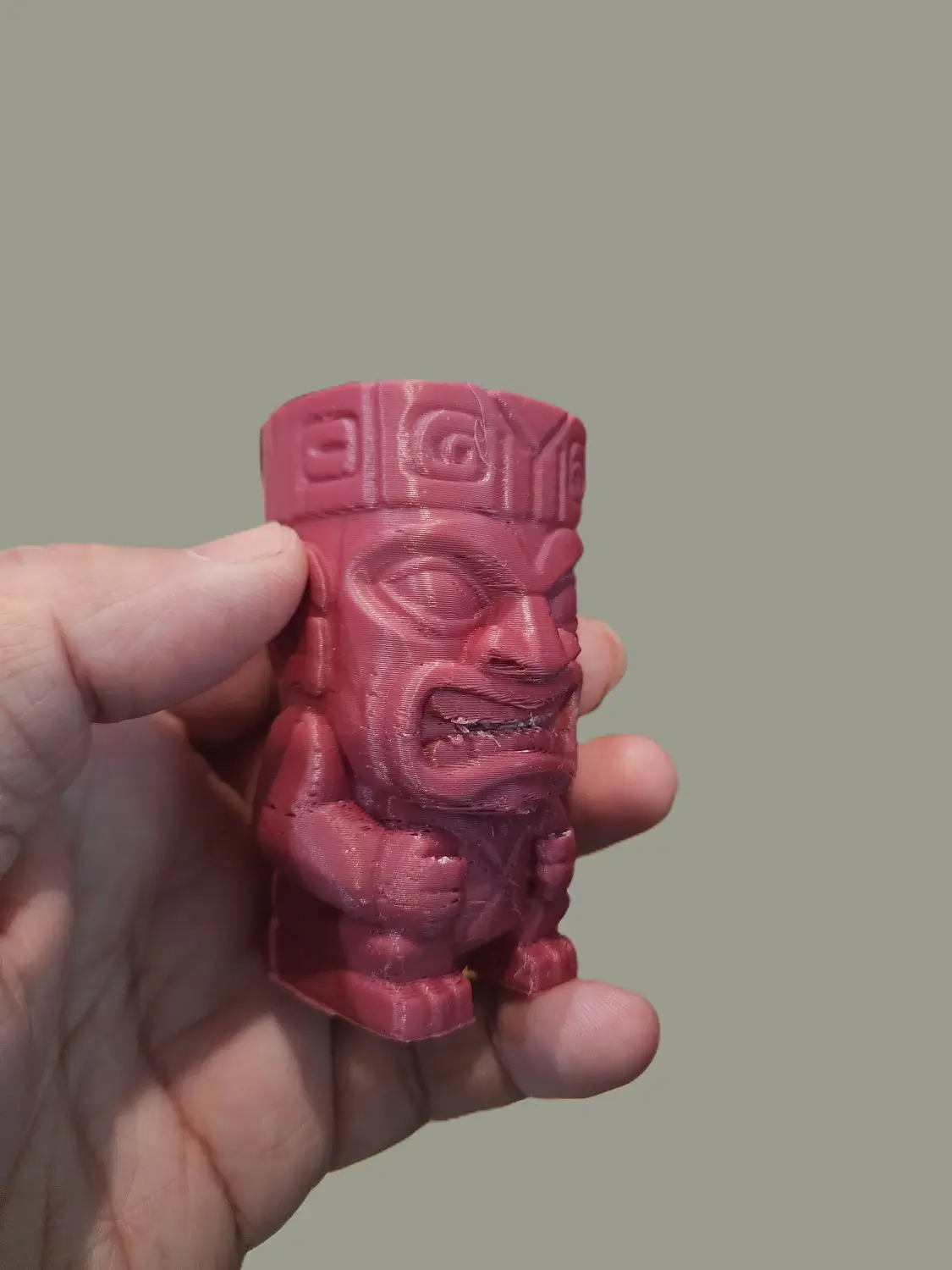
So instead of competing in spaces like traditional packaging—where the recycling narrative still dominates—we focus on applications where no good end-of-life solution exists. Think of things like 3D printing filament (which usually ends up in landfills), shotgun wads (which are discarded into the environment), or even fishing gear and shoewear. These are all products that are difficult or impossible to collect and recycle.
In those cases, PHAs offer a real advantage. They break down in nearly all natural environments and don’t leave behind persistent microplastics. That’s where we can make a difference.

Fred: PLA—polylactic acid—was one of the first commercially available bioplastics. It’s made by fermenting corn sugars into lactic acid, which is then polymerized. It was originally introduced as a substitute for polyethylene terephthalate (PET), one of the most widely used types of petrochemical plastics, especially in beverage packaging.
Unfortunately, some problems with PLA quickly became apparent. For example, PLA and PET look the same to consumers, so PLA ended up contaminating recycling streams instead of being put in waste streams destined for industrial composting. To make matters worse, the industrial composting infrastructure wasn’t ready to handle PLA then and it still isn’t today. Inevitably, most PLA ends up in landfill where its degradation takes significantly longer than advertised and releases microplastics in the process. All of these issues have led to a lot of unkept promises about the positive impacts of PLA, which some may call greenwashing. This set back the bioplastics industry.
PHA is completely different. It’s typically produced through microbial fermentation—or through cell-free processes like the one you’re developing at OliveBio. What’s special about PHA is its rheology, or how the material flows and behaves when processed. Depending on how it’s made—different feedstocks, fermentation conditions, or even enzyme systems—PHA can range from soft and rubbery to hard and rigid, like nylon. That makes it incredibly versatile and customizable for different applications. Equally importantly, PHA does not need industrial composting facilities to fully degrade when products are discarded.
Fred: Technically, PHAs have come a long way. Early on, they were tough to process. However, as the field progressed, all these different types of PHAs that you can mix and match became available – that opened up a lot of new possibilities. Now, the main bottleneck is equipment. Most plastic processing machines—whether they do injection molding, extrusion, blow molding or compression molding—are designed for petrochemical polymers. These traditional plastics have a very broad processing temperature range and a melt flow index (a measure of how easily a polymer flows when melted under specific conditions) that is very stable over broad temperature ranges. PHAs, on the other hand, have a much narrower thermal processing window.
That means you can’t just throw PHA into a standard processing machine and expect it to work. You need to tweak the equipment. We’ve spent a lot of time doing exactly that—customizing machines to be more PHA-friendly. In fact, we collaborated with Tech-long International and Jeepine in China to develop the first high-speed compression molding machine for PHA bottle caps. The machine can also run polypropylene. That kind of dual compatibility just wasn’t possible five years ago.
The other big challenge is infrastructure at the end of a product’s life. Even though most packaging ends up in landfills, rivers, and oceans, the industry still clings to the idea that everything should be recycled and that recycling is working very well currently. PHAs don’t fit that model, so they’re treated as contaminants—even though they degrade safely in environments where other plastics persist for centuries. That logic is baffling.
Fred: There’s this example I like to use—polypropylene straws. When people wanted to replace them, we got paper straws. But they didn’t work well, and everyone hated them. That’s the risk of introducing a sustainable alternative that doesn’t meet performance expectations.
Performance is non-negotiable. If you’re going to replace a plastic product, the biopolymer version has to work just as well—if not better. And biodegradability can’t be compromised either. Some clients have asked if “90% biodegradable” is good enough. It’s not. That last 10% is exactly what we’re trying to eliminate.
A good example is the shotgun wad material we co-developed with eco shot llc. It’s fired out of a barrel at over 1,200 feet per second. So it has to perform. But it also needs to break down safely in the environment afterward. That’s the kind of balance we aim for.
Fred: In some cases, yes. PHAs can have better barrier properties than materials like low- or high-density polyethylene, depending on how they’re formulated. But the bigger win is ecotoxicity—or the lack of it.
All of our PHA’s are tested using marine biodegradability standards like TÜV Austria, which include toxicity testing. Basically, after your material has been degrading in water for six months, you expose crustaceans—like brine shrimp—to that water and see what happens. If they die, that’s a problem. Same with composting. If your material degrades but poisons the compost, that’s not a win.
There’s still more to learn about material toxicity, and I appreciated your interview with Dr. Samantha Hughes that dove into some of these issues. But currently, these are the kinds of tests we in the bioplastics industry need to hold ourselves to. Ironically, no one’s asking these same questions about petrochemical plastics and the additives they leach into the environment.
Fred: Oh, that was a brilliant bit of marketing from the petrochemical industry. With one phrase, they managed to convince policymakers that bioplastics were the problem—not the 400 million tons of non-degradable plastic we produce each year.
The PLA industry shares some blame. PLA was launched without a realistic end-of-life plan. Composting worked in the lab, but real-world industrial composting infrastructure was almost nonexistent. So PLA often ends up in the same place as regular plastic where it takes almost just as long to degrade.
PHAs, on the other hand, can break down rapidly in home compost, in soil, and in water. They’re not perfect—but they’re far closer to a true solution.
Fred: If I could fix one thing, it would be the lack of infrastructure and incentives for end-of-life solutions. Recycling as it exists today is broken, and unless we build systems that support real biodegradability, we’ll keep running in circles.
Also, I wish policymakers and big brands would apply the same level of scrutiny to fossil plastics that they do to bioplastics. The goal shouldn’t just be “less bad”—we need materials that actively make things better.

About Fred Pinczuk
Fred Pinczuk is the Co-founder and Chief Technology Officer of Ecogenesis Biopolymers. With a long-standing background in the plastics industry, he focuses on the development, formulation, and processing of biodegradable polymers. His work bridges the gap between emerging sustainable materials and their practical application, with particular emphasis on ensuring performance and consistency at scale. At Ecogenesis, Fred concentrates on advancing PHAs and other compostable materials for use in products that lack realistic end-of-life solutions.

TM
TM
We are a team of molecular biologists, geneticists, engineers, and data scientists brought together by the desire to solve difficult problems with far-reaching implications.
Address
423 Hindry Ave, Suite B, Inglewood, CA 90301, United States
© 2025 All Rights Reserved. Website by Astrael